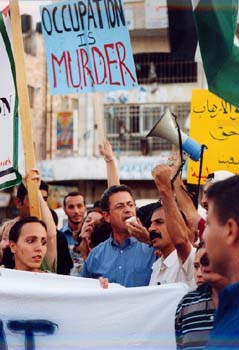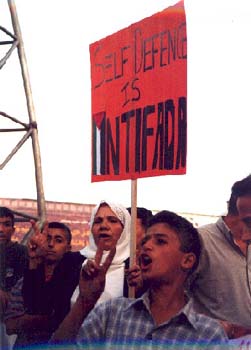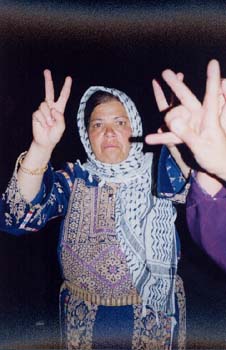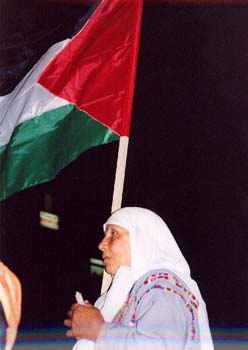

1. Demonstrations in Ramallah, October 2002
photos by Sune and Rudolf |
05
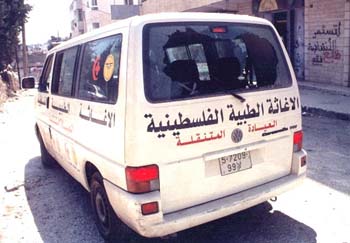
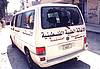
At every demonstration in the Occupied Palestinian Territories, at least one ambulance is present as a routine part of the programme. This UPMRC (Unions of Palestinian Medical Relief Committees) ambulance had its rear window shattered by an Israeli rubber-coated metal bullet during an anti-curfew demonstration in Ramallah. Since the beginning of the Intifada on 28 September 2000, seventeen medical personnel have been killed while on duty, 275 have been injured, 70 have been arrested, 100 ambulances have been attacked and 25 ambulances have been destroyed completely. (Source: Palestine Monitor, www.palestinemonitor.org)

02
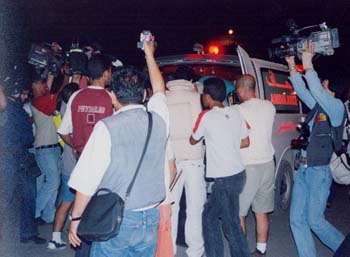
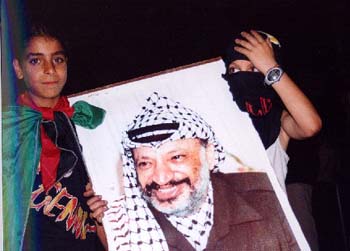
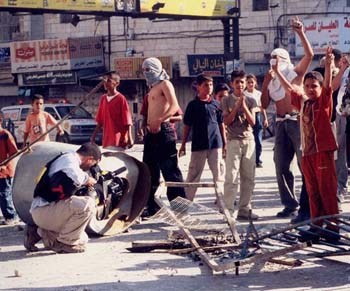
Demonstrators and cameraman, Ramallah, September 2002. Although it indeed comes to clashes and fatalities at some demonstrations, enterprising cameramen often make these events appear more dramatic than they actually are. The boys here represent more or less the total crowd present when the photo was taken.




03
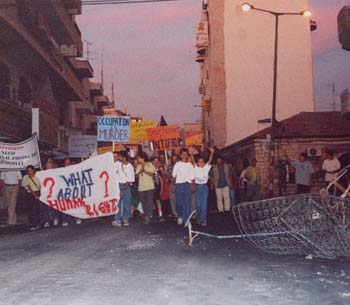
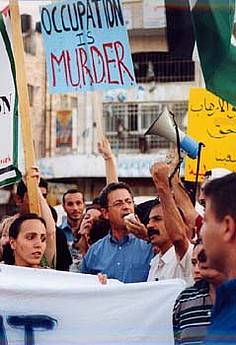
Mustafa Barghouti, Palestinian activist and president of the Union of Palestinian Medical Relief Committees, speaks at a rally in Ramallah. After Israeli troops invaded the Palestinian Authority's headquarters in Ramallah on 19 September 2002, a wave of peaceful demonstrationos protesting the Israeli curfew took place in the Occupied Palestinian Territories.

06a
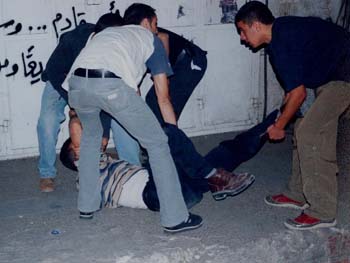
People rush to rescue a protester exposed to an excessive amount of teargas. Teargas is widely used by the Israeli army to disperse demonstrations, peaceful and violent alike. A common practice is to launch one grenade in front of the crowd, and one behind, thus trapping the protesters between two clouds of gas. This sometimes leads to a situation where protesters are exposed to an overdose of gas, which can cause severe asphyxiation and even death. Children and elderly people are particularly vulnerable. Since the beginning of the Intifada in September 2002, at least four Palestinian children have been killed by teargas.
06b
People rush to rescue a protester exposed to an excessive amount of teargas. Teargas is widely used by the Israeli army to disperse demonstrations, peaceful and violent alike. A common practice is to launch one grenade in front of the crowd, and one behind, thus trapping the protesters between two clouds of gas. This sometimes leads to a situation where protesters are exposed to an overdose of gas, which can cause severe asphyxiation and even death. Children and elderly people are particularly vulnerable. Since the beginning of the Intifada in September 2002, at least four Palestinian children have been killed by teargas.



04
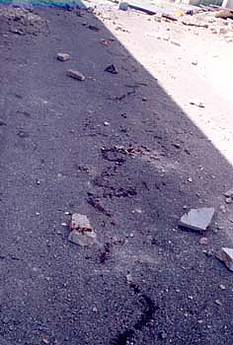
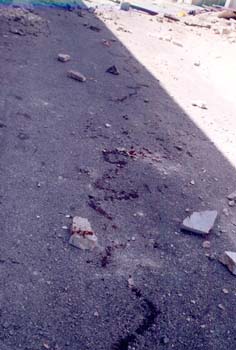
Trail of blood left by the victim of the Israeli army’s much-criticized open-fire policy. The victim was at the front of a group of protesters hurling stones at Israeli armed personnel carriers when he was hit in the head by a bullet fired by one of the Israeli soldiers holding the central square of Ramallah at the time. 19 September 2002.